
A few seasons ago, I placed a confident anytime touchdown scorer bet on a deep-threat wide receiver who had been torching defences for weeks. What I failed to check was the forecast: 25-mph winds with gusts approaching 40. The passing game was virtually non-existent, the running backs dominated touches, and my pick finished with two catches for 11 yards. That was an expensive lesson in a variable most TD prop bettors ignore entirely — weather.
Weather doesn’t change the rules of the game, but it reshapes how teams score. Wind suppresses deep passing, rain increases fumble risk and makes routes slippery, cold numbs fingers and affects ball security, and snow turns the field into a quagmire that favours power running. Each of these conditions shifts touchdown probability between positions, and if you’re not adjusting your picks accordingly, you’re leaving value on the table.
Environmental Impacts: Wind Velocity and Low-Temperature Performance Models
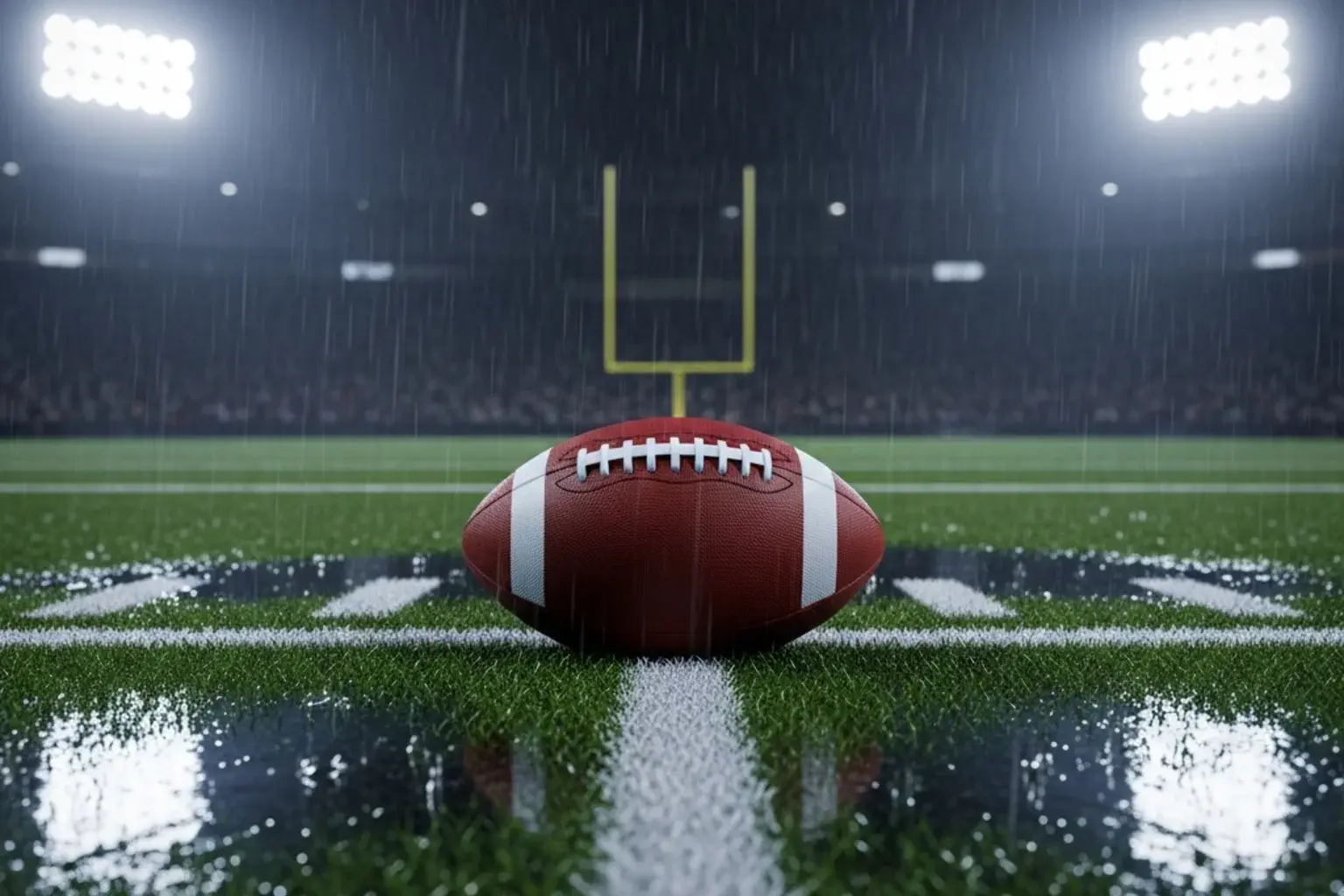
Rain is the most common adverse condition, and its impact is more nuanced than most punters assume. Light rain has minimal effect on modern NFL offences — synthetic turf drains quickly, and today’s quarterbacks train extensively in wet conditions. Heavy, sustained rain is a different matter. It degrades grip on the football, makes cutting harder for receivers, and generally favours teams with strong ground games. Passing touchdowns decline in heavy rain, but the overall touchdown count doesn’t always drop as sharply as you’d expect, because rushing touchdowns often fill the gap.
Cold temperatures alone are less impactful than people think. NFL players at outdoor venues in Green Bay, Chicago, and Buffalo spend the entire season acclimating to dropping temperatures. Where cold matters most is in combination with other factors — cold and wind, or cold and precipitation. Sub-zero conditions can affect ball inflation and grip, particularly for quarterbacks who prefer a specific ball texture. But I’ve tracked cold-weather games for years, and pure cold without wind or snow produces scoring numbers close to league averages.
Snow creates the most dramatic scoring shifts. Heavy snowfall slows every aspect of the game — receivers struggle to run precise routes, defenders lose footing, and special teams become unpredictable. Historically, snow games favour running backs and short-yardage passing concepts. The spectacle of a snowstorm game often masks the reality that these are some of the most predictable environments for TD prop bettors, because the scoring concentrates heavily among running backs and tight ends working underneath routes.
The Wind Speed Threshold for Passing Touchdowns
Wind is the weather variable I watch most closely, because its effect on passing touchdowns is both significant and quantifiable. Across seasons of data, a clear threshold emerges: once sustained wind speeds exceed 15 mph, passing efficiency drops noticeably. Above 20 mph, deep passing becomes unreliable enough to reshape the entire offensive game plan.
The mechanism is straightforward. A football in flight is a relatively light, oddly shaped projectile. Wind affects its trajectory, particularly on deep throws where the ball spends more time in the air. Quarterbacks compensate by throwing shorter and with more velocity, which favours slot receivers and tight ends running intermediate routes over outside receivers running vertical patterns. In Super Bowl 59, five of the seven touchdowns were caught by wide receivers in controlled dome conditions — a pattern you’d rarely see in a 20-mph crosswind.
What makes wind especially valuable for TD prop bettors is that the market often underreacts to it. Odds are typically set days before game day, when the forecast may not yet reflect game-time conditions. By Thursday or Friday, weather models become more reliable for Sunday’s conditions, and that’s your window to identify mispriced lines. A wide receiver priced at short odds based on recent form becomes much less attractive when 20-mph gusts are forecast, but his odds may not adjust until Saturday evening or game-day morning.
I keep a simple rule: once forecast winds exceed 15 mph sustained, I shift my TD picks toward running backs and tight ends. Above 20 mph, I avoid outside wide receivers entirely unless they run primarily short and intermediate routes. This filter alone has improved my hit rate in bad-weather weeks meaningfully.
Adjusting Your Touchdown Picks for Weather
The practical adjustment process starts with identifying which games face adverse conditions. I check forecasts every Thursday for Sunday’s slate, focusing on outdoor stadiums. Domed venues — including retractable-roof stadiums that close in poor weather — are unaffected, and games played there require no weather adjustment at all. Roughly a third of NFL teams play in domes or warm-weather outdoor stadiums, so weather is irrelevant for a significant portion of the schedule.
For affected games, the adjustment follows a consistent logic. In high-wind games, shift toward rushing touchdowns. The numbers support this strongly — 86.6% of all rushing touchdowns come from inside the red zone, and goal-line runs are essentially weather-proof. A running back who gets 3-4 carries from the 1-yard line faces the same opportunity whether it’s 25 degrees or 25-mph winds. His probability of scoring barely changes, while a deep-threat receiver’s probability drops substantially.
In rain games, watch for teams that already lean run-heavy. An offence that runs the ball 55% of the time in normal conditions will push that figure toward 60% or higher in sustained rain. The running backs on those teams see inflated touchdown opportunities, and the market doesn’t always adjust their odds quickly enough. Meanwhile, the opposing defence may also be affected — wet conditions make tackling harder and create more broken plays, which can lead to unexpected long rushing touchdowns.
Snow games demand the most extreme adjustments. I essentially treat them as running back and tight end markets, avoiding outside wide receivers almost entirely unless an obvious mismatch exists. The reduced passing volume concentrates scoring opportunities among a smaller pool of players, which can actually make TD picks easier rather than harder — fewer variables, more predictable outcomes.
One final point worth emphasising: weather affects both teams equally. If wind suppresses passing for one side, it does the same for the other. This means the overall game total typically drops, but the distribution of touchdowns shifts rather than disappearing. Understanding that redistribution is the key to profitable weather-adjusted TD betting.