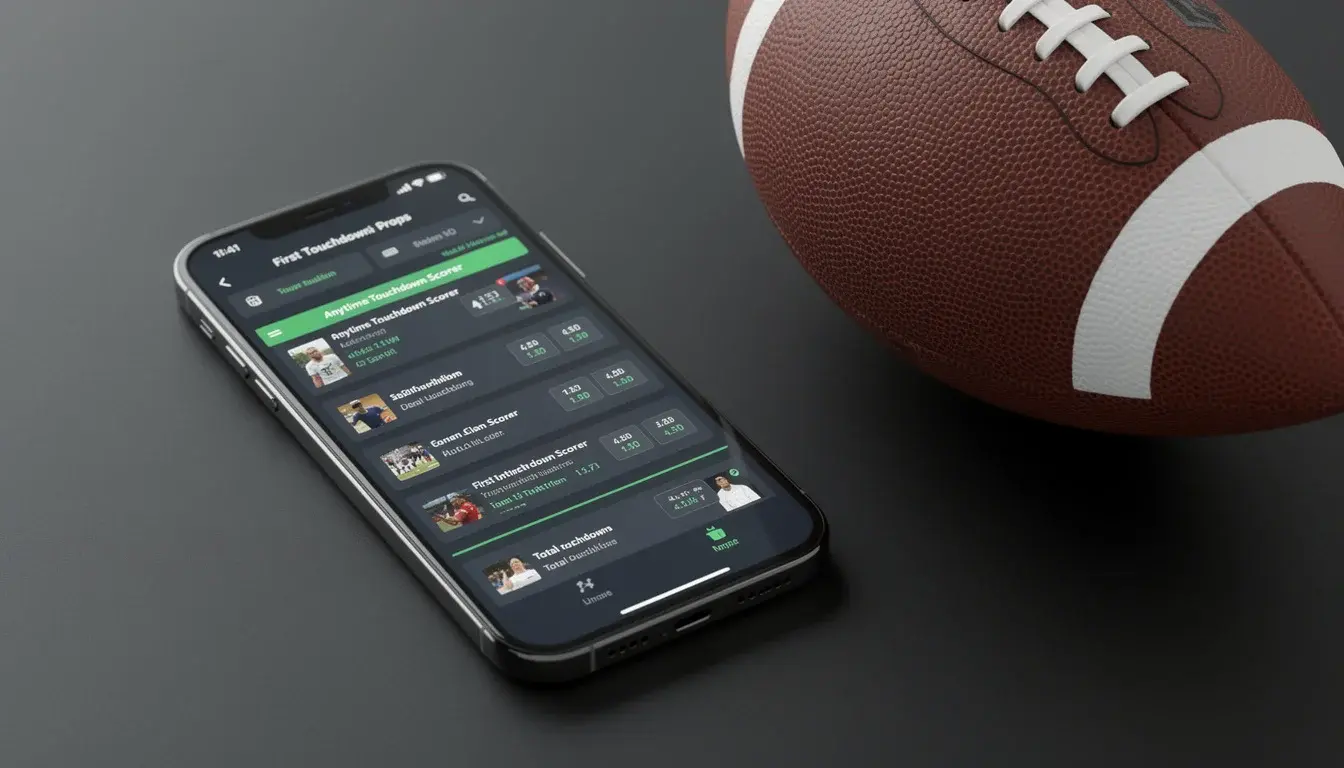

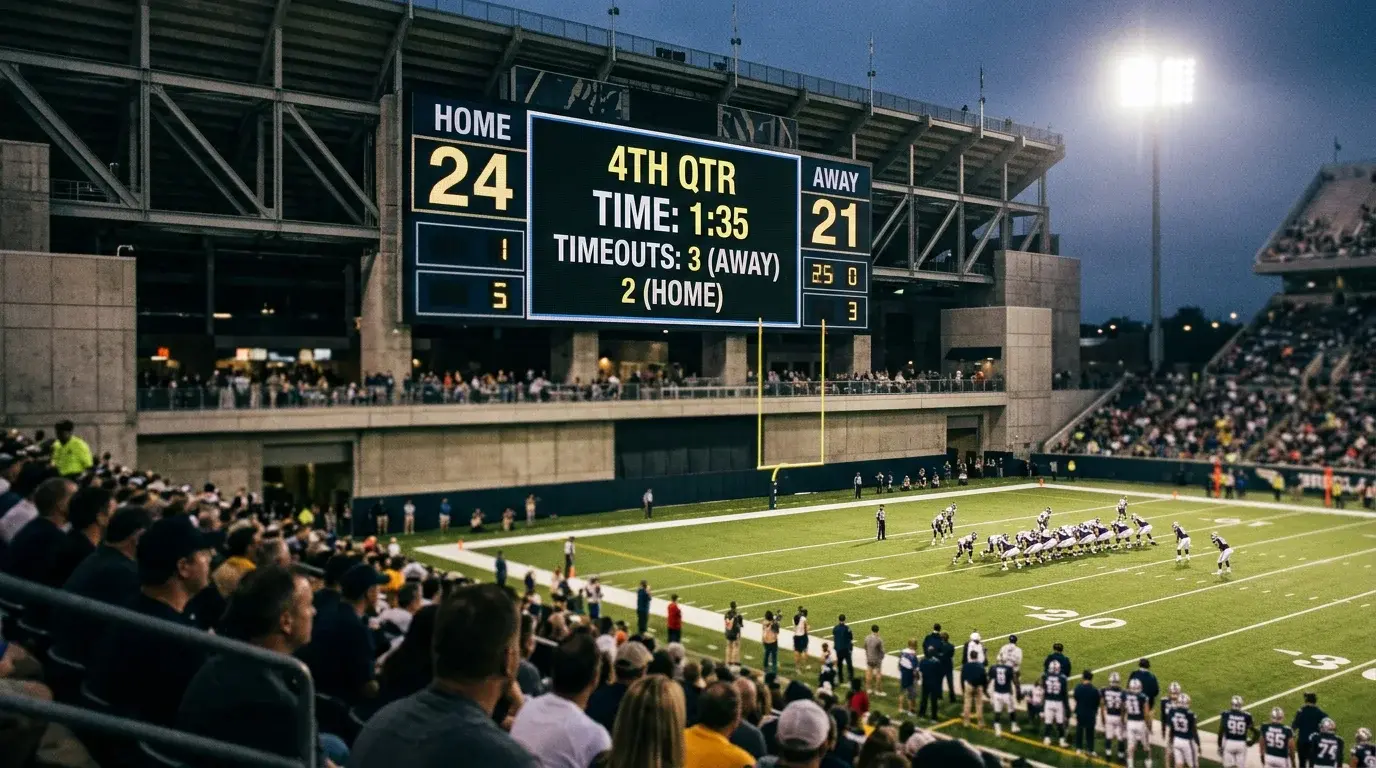
Most touchdown scorer guides start and end with anytime and first TD. The last touchdown scorer market sits in the corner like a quiet kid at a party – overlooked, underestimated, and occasionally brilliant. I started paying serious attention to it four seasons ago when I noticed something the anytime models were missing: late-game scoring follows a completely different logic than the rest of the game, and that logic creates opportunities the broader market consistently underprices.
Late-Game Metrics: Structural Variations in Last TD Scorer Markets
Let me clear up a misconception I encounter constantly: the last touchdown scorer market is not just the anytime market with extra suspense. The mechanics of settlement are identical – your player needs to score a touchdown, and the official NFL play-by-play determines the result. But the strategic considerations are entirely different, because you’re not betting on whether a player scores at any point; you’re betting on whether his touchdown happens to be the final one of the game.
That word “happens” is important. Predicting the last touchdown of a game requires you to think about game flow, not just player quality. A dominant running back might score three touchdowns in the first three quarters, but if the opposing team scores a garbage-time touchdown with two minutes remaining, none of those three scores was the last one. The running back was the best scorer in the game and still lost the last TD bet.
This is why last touchdown scorer odds are typically similar to first touchdown scorer odds – longer than anytime, reflecting the additional uncertainty. The market recognises that predicting the temporal position of a score is harder than predicting whether a score occurs at all. Where anytime odds for a running back might sit at 2.00, last touchdown odds for the same player could be 8.00 or higher, depending on the expected game flow.
UK bookmakers generally settle last touchdown bets based on the final confirmed touchdown in the game, including overtime. If the game ends with a field goal or a safety as the last scoring play, the last touchdown is still the most recent TD that was scored, regardless of how much time elapsed between that touchdown and the end of the game. Settlement isn’t about the last score – it’s specifically about the last touchdown.
Game Script and Late-Game Scoring Patterns
I keep a running log of last touchdowns in every NFL game I track, and the patterns are more reliable than you’d think once you know what drives late-game scoring.
Blowouts produce the most predictable last touchdowns. When one team is leading by three or more scores in the fourth quarter, the losing team is in desperation mode – passing on every down, taking risks, and often scoring against prevent defences that are designed to give up yards but run out the clock. The 2025 NFL season averaged 18.7 million viewers per game, and those viewers saw a clear trend in lopsided games: backup players and secondary options on the losing team frequently scored the game’s final touchdown, often against a defence that had already mentally checked out.
These garbage-time scores are where the last TD market gets interesting. The player who scores isn’t necessarily the team’s best player – he might be a third-string receiver running free against a soft zone, or a backup running back getting carries while the starters rest. The key insight is that garbage-time touchdowns are scored by players who are on the field at the end of the game, which depends more on roster management and coaching decisions than on talent rankings.
Close games create a different dynamic. When the score is tight going into the fourth quarter, the last touchdown is more likely to come from a team’s primary playmakers – the best running back or the top receiver – because coaches are deploying their strongest personnel in high-leverage moments. In these scenarios, the last TD scorer often overlaps with the player you’d pick for anytime, which means the odds differential between the two markets represents pure timing risk.
The pass-heavy trend in modern NFL football shifts the balance further. In Super Bowl 59, five of the seven total touchdowns were caught by wide receivers. Late-game drives, especially when a team needs to cover ground quickly, lean heavily on the passing game. If you’re targeting the last touchdown scorer in a game you expect to be competitive, wide receivers with high target shares are structurally favoured over running backs whose workload typically decreases when a team is trailing and needs to move fast.
Identifying Strong Last TD Scorer Candidates
After tracking hundreds of last touchdowns, I’ve developed a simple framework for identifying candidates. It’s less about finding the best player and more about finding the player most likely to be in the right situation at the end of the game.
For projected blowouts, look at the underdog’s passing options. The team expected to trail will be throwing the ball in the fourth quarter, and their top remaining receivers (accounting for potential garbage-time substitutions) are the most likely scorers. Check the underdog’s depth chart and identify the receivers who would stay in the game during garbage time – at some teams, the starters are pulled once the outcome is decided; at others, starters play through the final whistle regardless of the score.
For projected close games, the calculation flips. The favourite’s primary weapons become the focus, because the team with the lead is more likely to score on methodical late drives designed to close out the game. A running back on a team favoured by a touchdown, playing against a defence that struggles to stop the run in the red zone, is a strong last TD candidate in a close game – the favourite’s ideal script is to grind out a final scoring drive on the ground.
For games with little spread and high totals, where the market expects a shootout, the last touchdown is essentially a coin flip between several players on both sides. In these scenarios, I tend to look for the longest odds on a player I think has a reasonable chance, since the unpredictability makes every selection roughly equivalent in terms of confidence. The value, if it exists, is in the price rather than the prediction.
One angle that consistently performs better than I expected: teams that play well in the fourth quarter. Some offences are demonstrably better in the final fifteen minutes of games – they score more, they sustain longer drives, they convert more third downs. Fourth-quarter offensive efficiency isn’t always reflected in the last TD odds, which tend to be priced more on overall player reputation than on situational performance. That gap between reputation-based pricing and situation-based reality is exactly where I look for value in this market.
The last touchdown scorer market demands a different mindset from anytime or first TD betting. It rewards patience, game-script analysis, and a willingness to bet on scenarios rather than players. If the idea of betting on context rather than talent appeals to you, it’s worth exploring the 2+ touchdowns market as well – another proposition where game flow matters more than individual stats.