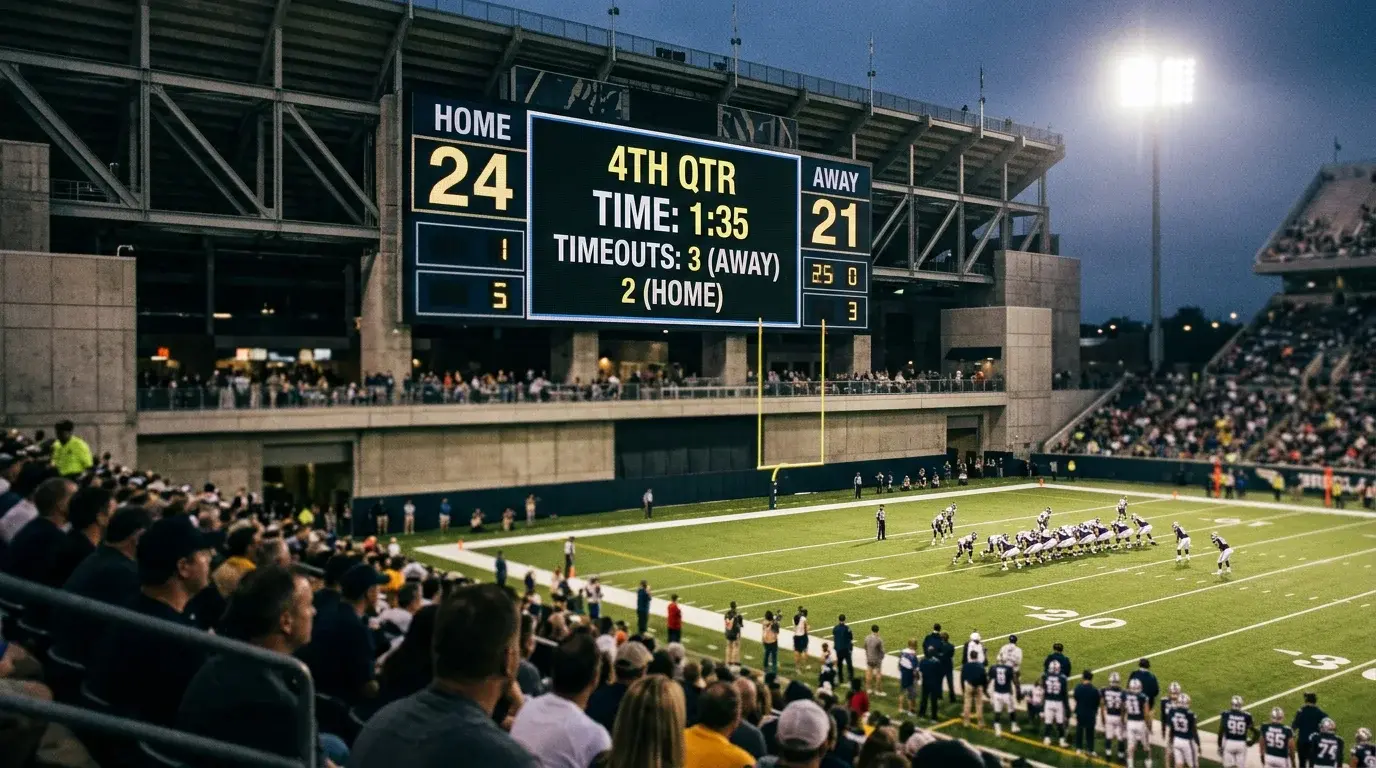


I spent my first three years betting on NFL touchdowns without once looking at red zone data. I relied on total yardage, highlight reels, and a vague sense of which players “looked dangerous.” My results were exactly what you would expect from that approach – random. The turning point came when I started tracking where touchdowns actually originate, and the answer was so concentrated in one area of the field that it reshaped my entire method. Nearly three-quarters of all NFL touchdowns – 73.9% historically – are scored inside the red zone, that final 20-yard stretch before the end zone.
That single statistic transformed how I evaluate every ATTS pick, how I assess defensive matchups, and how I decide which games to bet on at all. Red zone data is not a minor refinement to a general approach – it is the foundation. Once you see touchdown scoring through this lens, the market starts looking very different. Pricing gaps appear that are invisible to bettors who rely on total yards and highlight tapes.
This guide breaks down how red zone data predicts touchdown scoring and, more importantly, how to turn that data into better betting decisions. I will cover efficiency rates for offences and defences, introduce a metric called red zone plus/minus that most bettors have never heard of, and walk through a worked example of how I apply all of this to an actual ATTS selection. If you are already comfortable with the basics of touchdown scorer markets, this is where you move from understanding the “what” to mastering the “where.”
Red Zone Boundaries: Processing Field Position Probability Data
Walk into any pub showing NFL on a Sunday afternoon and ask the crowd what decides touchdown bets. Most will mention speed, talent, the quarterback’s arm. Almost nobody talks about geography – but geography is the whole game.
The red zone is the area between the opponent’s 20-yard line and the goal line. It is called the red zone because it represents danger for the defence, but from a bettor’s perspective, it is where opportunity concentrates. When an offence crosses the 20-yard line, the field compresses, the end zone becomes reachable on a single play, and the probability of any given player scoring a touchdown increases dramatically compared to a play run from midfield.
That 73.9% figure I mentioned is not a quirk of one season – it is a structural feature of how the sport works. The number fluctuates slightly year to year; in 2024, it actually climbed to 77.2%. But the direction is consistent. The vast majority of touchdowns happen in tight spaces, on short fields, with defences packed into small areas. This has profound implications for betting because it tells you which players to focus on. A receiver who does most of his damage between the 20-yard lines is a fantasy football asset. A receiver whose targets cluster inside the red zone is a touchdown betting asset. They are not the same thing, and confusing them is one of the most common analytical mistakes in this market.
For rushing touchdowns, the concentration is even more extreme. A full 86.6% of all rushing touchdowns come from inside the red zone, which makes intuitive sense – teams run the ball more frequently in compressed spaces where defenders are stacked in the box but the distance to the end zone is short enough that a single broken tackle or a well-executed dive can reach paydirt. If you back a running back for ATTS, you are essentially betting on his red zone carries. His 40-yard dash time and his open-field elusiveness are almost irrelevant.
The practical takeaway is straightforward: every touchdown bet you place should be evaluated through the lens of red zone involvement. If a player does not have a meaningful role inside the opponent’s 20-yard line, his anytime touchdown scorer odds are probably mispriced – just not in your favour.
Red Zone Efficiency Rates: Offence vs Defence
Not every red zone trip produces a touchdown – if it did, betting on this market would be far too easy. Some teams convert red zone possessions into touchdowns at elite rates; others settle for field goals with frustrating regularity. The gap between the best and worst red zone offences in any given season is enormous, and that gap is where I find some of my strongest ATTS edges.
During the 2025 season, the Philadelphia Eagles led the NFL with a red zone touchdown conversion rate of 70.97%. That means roughly seven out of every ten times Philadelphia crossed the opponent’s 20-yard line, someone scored a touchdown. Compare that to a league-average rate that hovers around 55% to 58% in most seasons, and you can see why Eagles skill players were consistently strong ATTS candidates. Red zone efficiency at that level is not random – it reflects coaching philosophy, personnel quality, and scheme design that sustains itself across games.
On the defensive side, the numbers are equally instructive. The Denver Broncos were the only team in 2025 to hold opponents below 50% touchdown conversion in the red zone, allowing just a 42.6% rate. When you backed an ATTS candidate against Denver, you were fighting structural headwinds. The player might still score, but the probability was meaningfully lower than if the same player faced a bottom-tier red zone defence that allowed touchdowns on 65% or more of opponent possessions.
Red zone efficiency predicts scoring better than total yardage – a point that Shurzy’s analytics team emphasises when they note that elite red zone offences with 65%+ TD rates and 4.0+ red zone trips per game score fast and cover team totals. I have found this to be one of the most reliable signals in my own analysis. A team that moves the ball well between the 20s but stalls in the red zone might produce impressive-looking drives that end in field goals, which is a disaster for your ATTS pick.
The key is to check both sides of the matchup. An average red zone offence facing a weak red zone defence can look elite for one week, while a strong offence facing an elite defence gets suppressed. I maintain a simple table that ranks all 32 teams by red zone TD conversion rate, updated weekly, and cross-reference it against every ATTS pick before I commit any money. It takes five minutes and has saved me from more bad bets than any other single check.
Goal-Line and Short-Yardage Tendencies
The red zone is 20 yards of real estate, but the final two yards are a different world entirely. A staggering 23.1% of all NFL touchdowns are scored from the 1- or 2-yard line – nearly a quarter of all scores come from a space barely wider than a dining table. If you are not tracking goal-line tendencies separately from general red zone data, you are missing a critical layer of information.
Goal-line formations reveal which players a coaching staff truly trusts in the highest-leverage situations. Some teams bring in a dedicated short-yardage back who barely plays elsewhere. Others keep their starter on the field. A few spread the formation and throw a quick pass. Each approach creates different ATTS implications, and the tendencies are remarkably stable from week to week within a given season.
I categorise teams into three goal-line archetypes. “Power teams” run the ball on 70%+ of plays inside the 3-yard line, typically with a specific back designated for the role. Backing that back as an ATTS candidate is straightforward when the matchup supports it. “Committee teams” rotate runners at the goal line based on game situation, which dilutes the probability for any single player and makes ATTS picks on their backs less attractive. “Spread teams” use four- and five-receiver sets even at the goal line, creating passing touchdowns that benefit receivers rather than backs.
Tracking which archetype a team falls into is one of my most reliable pre-season preparation tasks. I review the previous season’s goal-line play-calling data for every team, note any coaching changes that might alter the approach, and update my classifications as new data arrives during the season. By Week 4, I usually have a clear picture of each team’s goal-line identity, and that picture rarely changes significantly unless there is a major injury or a coaching staff shakeup.
The practical application is direct. When a power team reaches the 1-yard line, I know which player is most likely to get the ball. When a spread team gets there, I know the touchdown is more likely to go to a receiver. This is not prediction – it is pattern recognition backed by charting data, and it makes the difference between a blind guess and an informed assessment. For a deeper look at how different positions capitalise on these goal-line situations, the weather and touchdown scoring analysis explores how conditions shift these tendencies even further.
Applying Red Zone Data to Touchdown Scorer Picks
Data without application is just trivia. Here is how I turn red zone numbers into actual betting decisions, using a worked example from the kind of analysis I run every week.
Suppose I am evaluating a running back – call him Player A – for an ATTS pick. His team has a red zone TD conversion rate of 63%, enters the red zone 3.8 times per game, and Player A handles 45% of the team’s red zone carries. The opponent allows a red zone TD rate of 60%, which is slightly above average. Start with the team’s expected red zone touchdowns: 3.8 trips multiplied by a blended conversion rate (I use the average of the offensive and defensive rates, so roughly 61.5%) gives about 2.3 expected red zone touchdowns per game. Player A’s 45% share of red zone carries means he is involved in approximately 1.0 of those touchdowns. That translates to roughly a 55% to 60% probability of scoring at least once, depending on how you adjust for shared carries versus solo touches.
Now convert that probability to decimal odds. A 57% implied probability equals decimal odds of 1.75. If the best available bookmaker price on Player A is 2.00, you have a potential edge of roughly 14% – well above my 10% threshold. If the price is 1.65, you are laying money on a negative-EV proposition, and no amount of conviction should override the maths.
This calculation is not precise to the decimal point, and I do not pretend otherwise. It is an estimation framework, not a physics equation. But estimating a player’s probability within a 5% to 10% range and comparing that to the available odds is infinitely better than looking at a player’s last three games and deciding he “feels due.” The red zone data gives the estimation a structural foundation. Without it, you are building on sand.
I apply this method slightly differently depending on the position. For running backs, the calculation is relatively clean because their red zone involvement is mostly carries, which are easier to attribute. For receivers, I adjust by factoring in the target-to-catch conversion rate inside the red zone, which is typically lower than in open field because defensive coverage tightens. A receiver with a 75% catch rate between the 20s might only catch 55% of his targets inside the red zone, and those contested catches convert to touchdowns at a lower rate than a clean reception on a fade route. These adjustments add a layer of complexity, but they also improve accuracy – and accuracy is what separates a framework from a guess.
One caution: do not fall into the trap of over-engineering. I have seen bettors build elaborate models with fifteen variables that produce false precision. Red zone share, red zone efficiency, and goal-line role – three inputs – explain the vast majority of touchdown scoring variance. Adding more variables often introduces noise rather than signal. Keep the model simple, keep the data fresh, and trust the process over any single week’s results.
Where to Find Red Zone Data Each Week
The good news is that every piece of red zone data I have described in this guide is freely available. You do not need an expensive subscription or a data science degree to access it. The barrier to entry is not cost – it is consistency.
NFL.com and its associated stats pages publish red zone efficiency rates for every team, updated after each game. The data is broken down by offensive and defensive performance, and you can filter by rushing and passing. It is not the most elegant interface, but it is accurate and timely. Pro Football Reference provides deeper historical context, including red zone splits by down and distance, which is useful when you want to verify whether a team’s current-season performance is sustainable or represents a deviation from their norm.
TeamRankings publishes red zone data in a format specifically designed for bettors, including red zone scoring percentage, red zone plays per game, and red zone first downs. Their data updates quickly and is organised in a way that makes week-to-week comparison straightforward. I check this site every Wednesday as part of my regular workflow.
For goal-line-specific data, charting services like Sharp Football Analysis provide play-by-play breakdowns that let you see exactly which players get the ball inside the 5-yard line. This level of granularity is where the edge lives – it is one thing to know a team converts red zone trips at 62%, and another to know that their third-string fullback gets three-quarters of their 1-yard carries.
I recommend building a simple spreadsheet that tracks four columns per team per week: red zone trips, red zone touchdowns, rushing touchdowns from inside the 5, and the primary goal-line scorer. Update it after every game, and within four weeks you will have a clearer picture of red zone dynamics than 95% of the betting public. The data is there. Collecting it consistently is the differentiator.
One additional source worth mentioning: the NFL’s own Next Gen Stats platform provides player-tracking data that includes how often a player is on the field during red zone snaps. This is different from traditional snap-count data because it accounts for personnel packages – a receiver might play 85% of offensive snaps but only 60% of red zone snaps because his team switches to heavier formations near the goal line. That 25% drop is invisible in standard box scores but directly relevant to your ATTS analysis. Cross-referencing Next Gen Stats with the red zone efficiency data from TeamRankings gives you the most complete picture available without paying for a premium service.