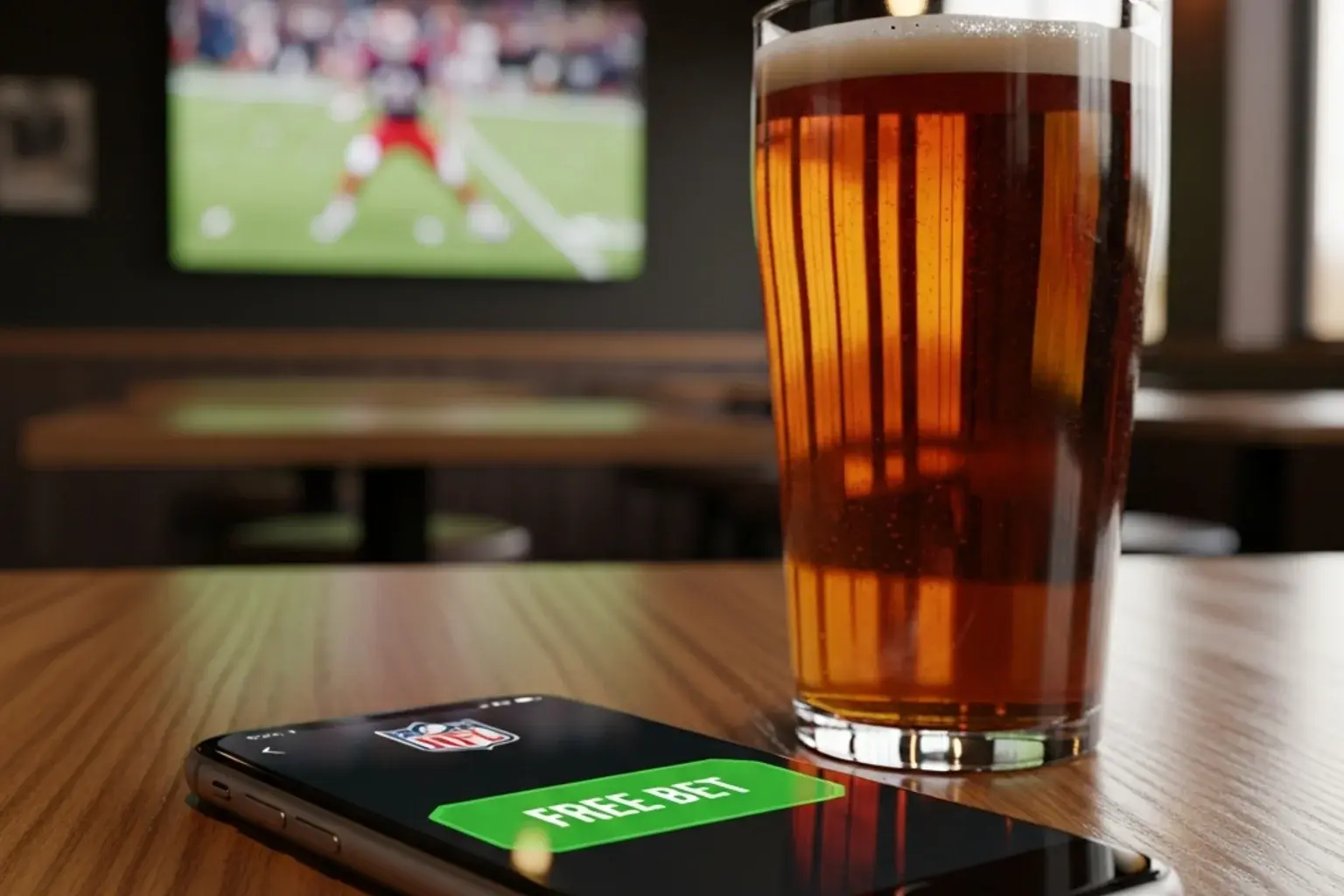
Free bets are one of the few genuinely risk-free tools available to UK punters, and they’re particularly well suited to touchdown scorer markets. The UK gambling industry generates £16.8 billion in gross gambling yield annually, and a meaningful slice of that comes from the promotional offers bookmakers use to attract and retain customers. If you’re going to claim those offers anyway, you might as well deploy them where they do the most good — and TD props are an excellent destination for free bet stakes.
That said, not all free bets work equally well on NFL touchdown markets. The type of offer, the terms attached, and the strategy you use to deploy the free bet all affect whether it delivers genuine value or just the illusion of it. Here’s how to navigate the landscape.
Promotional Arbitrage: Maximizing Welcome Bonuses on High-Yield Prop Lines
UK bookmakers offer several distinct categories of promotional bets, and understanding the differences matters for how you allocate them to TD props.
Sign-up free bets are the most common. These are one-time offers for new customers, typically structured as “bet £X, get £X in free bets.” The qualifying bet must be placed with your own money at minimum odds, and the free bet is credited after that qualifying bet settles. For touchdown scorer markets, the qualifying bet is straightforward — place it on any eligible market — and then use the free bet credit on your TD pick of choice.
Matched deposit bonuses work differently. The bookmaker matches your initial deposit with bonus funds, but those funds come with wagering requirements — typically 3x to 10x the bonus amount before you can withdraw any winnings. These are less ideal for TD props because the wagering requirements force you to bet the bonus amount multiple times, which eats into any edge you might have. Unless the wagering requirements are unusually low (3x or below), I generally avoid using matched deposit bonuses on touchdown markets.
Reload offers and loyalty free bets are awarded to existing customers, often weekly or around major events like the NFL season opener, Thanksgiving, or the Super Bowl. These tend to be smaller in value — £5 to £10 — but they often carry simpler terms than sign-up offers. Some bookmakers offer NFL-specific reload free bets during the season, which are tailor-made for TD prop use.
Enhanced odds promotions are a category worth highlighting separately. Bookmakers frequently boost the odds on specific NFL touchdown scorer markets — for example, offering 5.00 on a favourite to score anytime when the standard price is 1.80. These aren’t technically free bets, but they function similarly by shifting the expected value in your favour. The catch is that enhanced odds are usually capped at small stakes (£5 to £10), limiting the total profit. Still, they’re worth taking when the boosted price exceeds your estimated fair odds.
Best Ways to Use Free Bets on Touchdown Scorers
The optimal strategy for deploying free bets depends on how the free bet settles. Most UK free bets are “stake not returned” — meaning if your free bet wins, you receive the profit but not the free bet stake itself. This changes the maths compared to a normal bet and should influence which markets you target.
With stake-not-returned free bets, higher odds deliver more value than lower odds. If you place a £10 free bet at odds of 1.50, a win returns £5 profit. The same £10 free bet at odds of 4.00 returns £30 profit. Because you’re not risking your own money, the downside of the longer odds is eliminated — you lose nothing if the bet fails. This is why free bets pair naturally with first touchdown scorer markets or higher-priced anytime TD picks, where the odds are in the 3.00 to 8.00 range.
That doesn’t mean you should throw free bets at the longest odds available. A 50/1 shot has long odds for a reason — the probability of winning is negligible regardless of whether you’re using a free bet or real money. The sweet spot sits in the 3.00 to 6.00 range, where the odds are long enough to generate meaningful profit from a stake-not-returned free bet but short enough that the selection has a realistic chance of landing.
For a practical example, consider a running back priced at 3.00 to score anytime against a weak red zone defence. With a £10 free bet (stake not returned), a win delivers £20 profit. If your analysis puts his true scoring probability at 40%, the expected value of this free bet is: (0.40 x £20) — (0.60 x £0) = £8.00. That’s £8 of expected value from a bet that costs you nothing — a return you’d never achieve with your own money at the same odds.
Key Terms and Conditions to Watch
Every free bet comes with terms, and the ones that trip up NFL bettors most often are minimum odds requirements and market restrictions.
Minimum odds requirements typically range from 1.50 to 2.00 for qualifying bets and free bet use. If the minimum is 2.00, you can’t use your free bet on a heavy favourite priced at 1.40 to score anytime. This restriction naturally pushes you toward the higher-odds selections that we’ve already identified as the optimal use of stake-not-returned free bets, so it aligns well with the strategy.
Market restrictions are the more significant concern. Some bookmakers exclude certain prop markets from free bet eligibility, or limit free bets to specific sports or competitions. Before planning to use a free bet on an NFL touchdown scorer market, check the terms to confirm that player props are eligible. Most major UK operators allow free bets on NFL props, but smaller or newer bookmakers sometimes restrict them to main match markets only.
Expiry dates matter too. Many free bets expire within 7 days of being credited. During the NFL season, this usually isn’t a problem — you’ll find eligible games every week. But during the off-season or bye weeks, a short expiry window could force you to use the free bet on a sport or market you haven’t researched, which defeats the purpose of strategic deployment. Time your sign-up to coincide with the start of the NFL season or a week with a full Sunday slate to maximise your flexibility.
The UK’s regulatory framework adds a layer of protection here. Since February 2025, operators must conduct financial vulnerability checks when a customer’s net losses exceed £150 within 30 days. Free bets don’t typically count toward this threshold because they’re promotional funds rather than customer deposits, but the winnings from free bets do count as real money once credited. Keeping track of your overall spend — including free bet activity — is a bookmaker management habit worth developing.