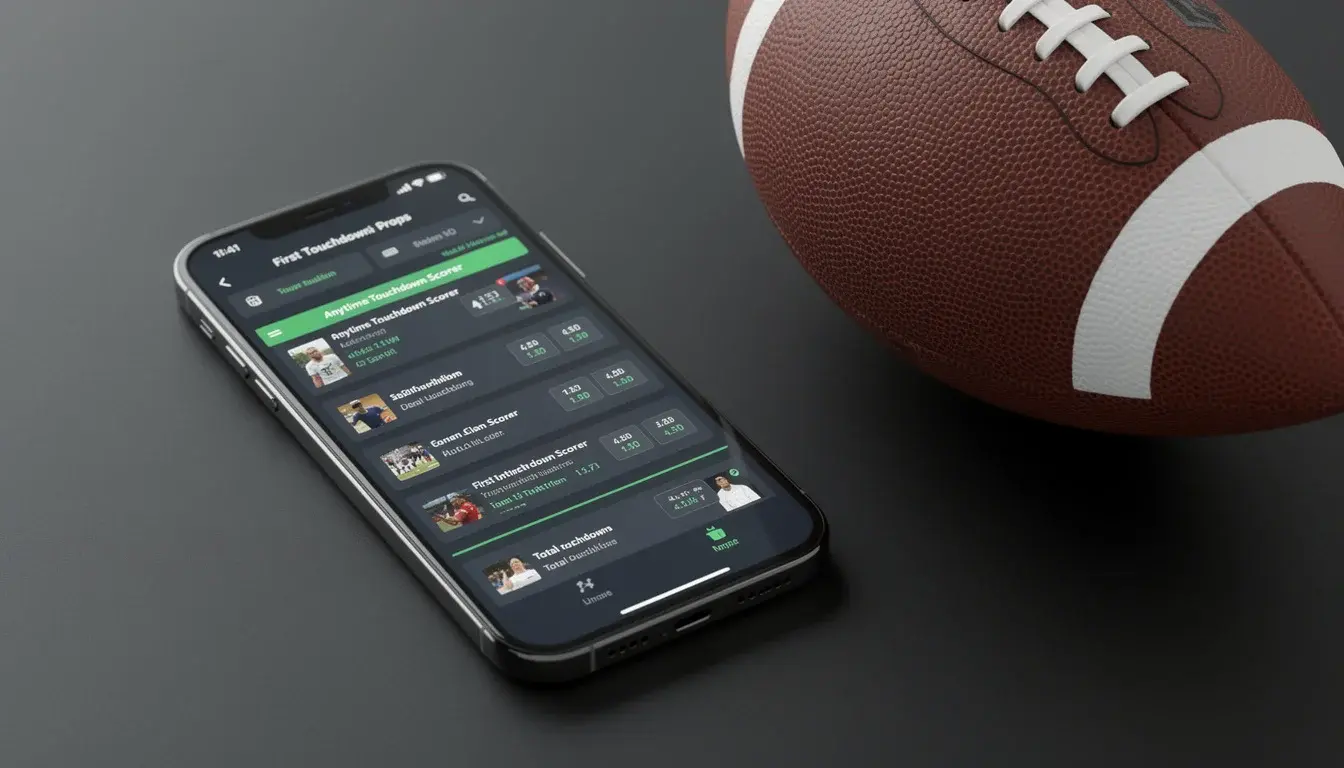


A mate of mine once celebrated a touchdown that never was. His quarterback threw a beautiful pass into the end zone, and he was convinced his “anytime touchdown scorer” bet on the QB had just landed. It hadn’t. The passing touchdown exception – the single most misunderstood rule in this market – meant his bet was dead before the confetti settled. That conversation, and the look on his face when I explained it, is the reason I think every UK punter needs to understand settlement rules before placing a single pound on a touchdown scorer market.
Bookmaker rules aren’t just fine print. They determine whether you get paid, whether your bet is voided, and whether that overtime score you’re celebrating actually counts toward your slip. I’ve been analysing NFL prop markets for over twelve years, and the most avoidable losses I see – season after season – come from punters who understood the sport but not the settlement mechanics.
Official Settlement Guidelines: Dead-Heat Rules and Inactive Player Terms
Let me start with something that surprised me early on: UK bookmakers don’t all settle touchdown bets the same way. There’s broad agreement on the basics, but the edge cases – the ones that actually cost you money – are where the differences live.
The core settlement principle is straightforward. A player is credited with a touchdown if he is the ball carrier who crosses the goal line or catches a pass in the end zone. The official NFL play-by-play stats determine the scorer, not the broadcast commentary or the initial call on the field. If the NFL’s official scorer credits a player with a touchdown, that’s who your bookmaker pays out on. If the official scorer changes the credit after review, the updated credit stands.
For anytime touchdown scorer bets, your player needs to score at least one touchdown during the game. It doesn’t matter when it happens – first quarter, fourth quarter, or overtime. For first touchdown scorer bets, your player must score the very first TD of the entire game. Last touchdown scorer works identically but for the final score. Multiple touchdown scorer bets require your player to score two or more times.
Settlement typically happens within minutes of the game ending. Bookmakers pull data from official NFL sources, not from TV broadcasts, which is why you might occasionally see a brief delay if there’s a scoring dispute or a stat correction. In rare cases, the NFL issues a stat correction the following day – and most UK bookmakers explicitly state that bets are settled on the result as declared immediately after the game, not on subsequent corrections. That said, I’ve seen exceptions, so it’s worth checking your bookmaker’s specific wording.
The passing touchdown rule deserves its own emphasis here: a quarterback who throws a touchdown pass is not the scorer. The receiver who catches the pass is. A QB only counts for touchdown scorer bets if he physically carries the ball into the end zone on a rushing play. This applies universally across all UK bookmakers I’ve encountered.
Edge Cases: Overturned TDs, Inactive Players, and Voided Legs
Here’s where twelve years of tracking these bets really pays off, because edge cases are where money gets left on the table – or snatched away without warning.
When a touchdown is overturned by replay review, the play is treated as though the touchdown never happened. If the officials initially signal a touchdown but then reverse the call after reviewing the footage, no touchdown is recorded in the official stats, and your bet doesn’t win. This catches people off guard, especially in live betting situations where the bookmaker may have briefly shown the bet as won before the review concluded.
Inactive players create a different situation. If you bet on a player who is subsequently ruled inactive before the game starts – meaning he doesn’t appear on the active roster for that game – most UK bookmakers will void your bet and return the stake. But “most” is not “all.” Some bookmakers treat this as a losing bet if the player was on the active roster when the bet was placed but was later scratched. The distinction usually depends on whether the player was officially listed on the 46-man game-day roster. Always check the specific bookmaker’s rules, because a late Sunday morning scratch could mean the difference between getting your money back and losing it.
Voided legs in parlays (or accumulators, in UK terminology) add another layer. If one leg of your accumulator involves a player who doesn’t play, that leg is typically voided and the remaining legs are recalculated at adjusted odds. But again, this isn’t universal. Some bookmakers void the entire accumulator if any leg is void. Others simply remove the voided leg and pay out the parlay at the reduced odds. Knowing which approach your bookmaker takes before you build a multi-leg bet is essential.
Defensive and special teams touchdowns also deserve a mention. If a defensive player returns an interception for a touchdown, or a special teams player returns a kick for a score, these generally count for touchdown scorer bets – the player who physically scored is credited. But some bookmakers only offer markets on offensive skill position players (running backs, wide receivers, tight ends, quarterbacks), so defensive and special teams players may not appear in the available selections at all. The UKGC conducted 9,700 compliance actions in the 2024/25 period, a sharp rise from the previous year, partly driven by clearer settlement rule enforcement – so bookmakers are under pressure to make these policies transparent.
Where UK Bookmaker Rules Diverge
I keep a spreadsheet. Every season, I go through the touchdown scorer rules at major UK bookmakers and note the differences, because they shift more often than you’d expect – especially after regulatory updates.
The biggest area of divergence is overtime. Most UK bookmakers include overtime in anytime touchdown scorer settlement, meaning if your player scores in OT, your bet wins. But a handful of bookmakers settle anytime bets on regulation time only, treating overtime as a separate period. For first touchdown scorer bets, the divergence is even sharper: some bookmakers explicitly exclude overtime from the “first” determination, while others include any score that occurs, regardless of period. If you’re placing a bet on a game that looks likely to be close, this distinction could be the difference between a win and a loss.
Another point of divergence: what happens when a game is abandoned or postponed. If an NFL game is suspended and resumed within a specific window (usually 24 to 48 hours), most bookmakers honour the original bets and settle based on the final result. If the game is abandoned entirely – extremely rare in the NFL but not impossible – bets are typically voided. However, a few bookmakers will settle based on the result at the time of abandonment if a certain number of minutes have been played.
UK regulatory changes have also started affecting how bookmakers handle TD scorer markets. Since February 2025, online operators must conduct financial vulnerability checks when a customer’s net spend exceeds 150 pounds over 30 days. This doesn’t change the settlement rules themselves, but it can affect your ability to place bets if you’re flagged during a check. For punters who bet regularly on NFL props across a full season, that 150 pound threshold can be reached quickly, and understanding the process beforehand prevents frustration mid-season.
My advice: before you commit to one bookmaker for the NFL season, read the full touchdown scorer rules page – not the marketing summary, the actual terms. If the rules on overtime settlement aren’t clear, contact their support and get a written answer. It takes ten minutes and can save you real money over seventeen weeks.