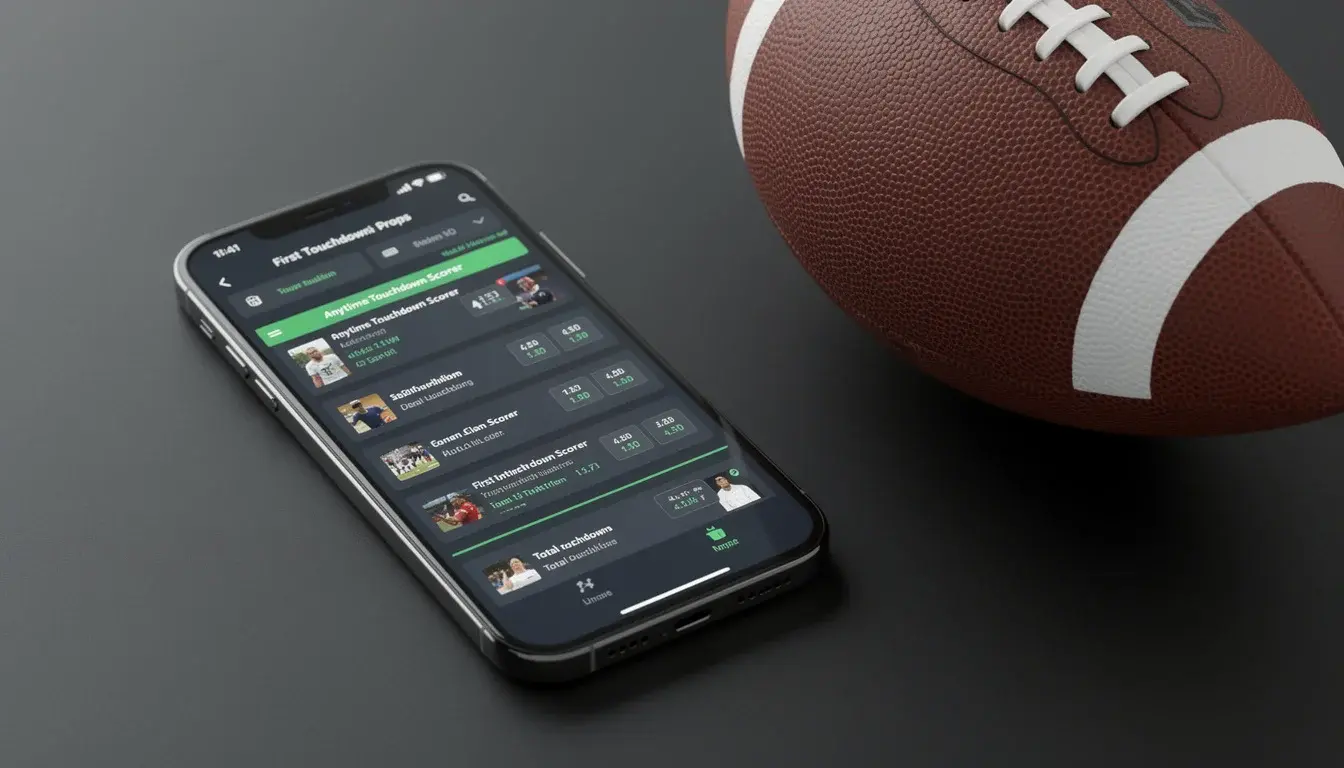


Every NFL season, I receive messages from frustrated punters who backed a quarterback as an anytime touchdown scorer, watched him throw three touchdown passes, and then discovered their bet lost. It’s one of the most common misunderstandings in the touchdown prop market, and it costs people money. The rule is simple once you know it, but it trips up even experienced bettors who come to the NFL from other sports where the scorer designation works differently.
The core issue is how bookmakers define “scoring” a touchdown in the context of TD scorer bets. Understanding this definition — and the one important exception that makes quarterbacks viable scorer picks under the right circumstances — is essential knowledge for anyone betting this market.
Quarterback Designations: Scorer Market Exceptions and Settlement Disputes
In American football, a passing touchdown is credited to the quarterback in the official NFL statistics. He threw the pass, he gets the touchdown in the record books. But for betting purposes, touchdown scorer markets are built around a different principle: the player who physically possesses the ball in the end zone is the scorer.
When a quarterback throws a 30-yard touchdown pass to a wide receiver, the receiver catches the ball and crosses the goal line. He’s the one who “scored” in the eyes of the bookmaker. The quarterback facilitated the score, but he didn’t carry or catch the ball into the end zone himself. This distinction mirrors how most UK sports handle scoring — in football (soccer), the player who puts the ball in the net is the scorer, not the player who made the assist.
The practical impact is significant. Elite quarterbacks throw 25-40 touchdown passes per season, but those passing touchdowns do not count toward any TD scorer bet. A punter who backs Patrick Mahomes as an anytime touchdown scorer is only betting on whether Mahomes physically runs or catches the ball into the end zone himself. His arm, no matter how prolific, is irrelevant to the bet’s outcome.
This rule is universal across UK bookmakers. I’ve checked the terms at every major UKGC-licensed operator, and the language is consistent: touchdown scorer bets settle based on the player who carries or catches the ball into the end zone, not the passer. There’s no variation or ambiguity on this point. If a quarterback’s only touchdowns come through passing, your anytime TD scorer bet on him loses.
When Quarterbacks Do Qualify: The Rushing TD Angle
The exception that makes quarterbacks legitimate TD scorer picks is the rushing touchdown. When a quarterback tucks the ball and runs it across the goal line himself, he is the ball carrier, and that counts as a scored touchdown for betting purposes. This is why mobile quarterbacks — the ones who run designed QB runs and scramble near the goal line — carry genuine TD scorer value.
The numbers on rushing touchdowns provide important context. Across the NFL, 23.1% of all touchdowns are scored from the 1- or 2-yard line, where quarterback sneaks are a common playcall. Teams with mobile quarterbacks use QB sneaks and designed runs at the goal line at significantly higher rates than teams with pure pocket passers. A quarterback who rushes for 5-8 touchdowns per season is scoring from the ground at a rate comparable to many backup running backs.
The value proposition shifts depending on the quarterback’s rushing profile. Dual-threat quarterbacks who average 4-6 rushing attempts per game and operate near the goal line represent the sweet spot. Their rushing TD probability is high enough to justify the bet, and because many casual punters avoid quarterbacks entirely — burned by the passing TD misconception — the odds on mobile QBs as touchdown scorers are often longer than they should be. That mispricing is where the edge sits.
Pure pocket passers, by contrast, are poor TD scorer picks almost without exception. A quarterback who rushes fewer than twice per game and rarely scrambles near the goal line might score one or two rushing touchdowns across an entire season. At those rates, even generous odds can’t overcome the low probability. I avoid pocket passers in this market entirely, regardless of how dominant their passing statistics look.
How UK Bookmakers Handle QB Touchdown Props
Some UK bookmakers offer separate markets specifically for quarterback touchdown props, which adds a useful layer of flexibility. These typically include “quarterback to score a rushing touchdown” markets, which function identically to a standard anytime TD scorer bet but are labelled to avoid confusion. The odds in these dedicated QB markets tend to be more accurately priced than in the general anytime TD scorer pool, because the bookmaker has already filtered out the passing touchdown misunderstanding.
With roughly 10% of the UK population betting on sports online, and a growing share of that activity directed toward American football, bookmakers have responded by expanding their NFL-specific market offerings. Several operators now include quarterback rushing props within their bet builder tools, allowing you to combine a QB rushing TD with other selections in the same game. This is useful for building same-game parlays where you project a mobile quarterback’s team to dominate on the ground.
One nuance worth noting: some bookmakers include a “quarterback to score or throw a touchdown” market as a separate offering. This market does count passing touchdowns, but it’s priced very differently from the standard scorer market — typically at much shorter odds, reflecting the high probability that any starting quarterback will throw at least one TD pass. Don’t confuse this market with the standard touchdown scorer rules that apply to anytime and first TD markets. The two are distinct products with distinct settlement criteria.
The bottom line on quarterback TD bets is simple: know the rule, identify the rushing QBs, and ignore the pocket passers. A mobile quarterback who rushes 5-6 times per game and plays for a team that uses designed QB runs near the goal line is a viable — and often underpriced — anytime touchdown scorer pick. A pocket passer is not, no matter how many touchdowns he throws. Once this distinction is clear in your mind, you’ll never fall into the passing TD trap again.